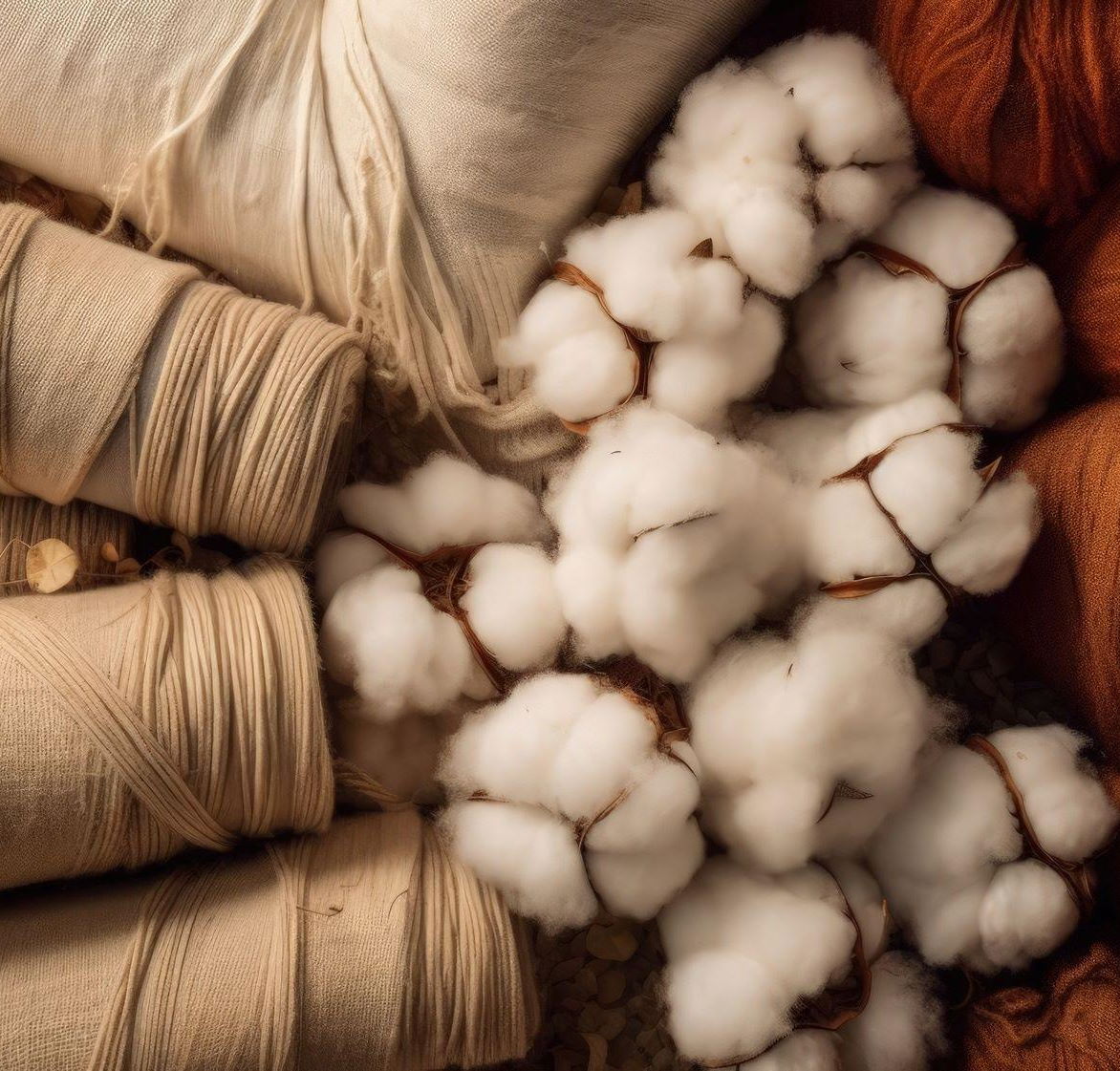

RAW MATERIAL
The natural fibre cotton offers unsurpassed skin comfort for textiles, coupled with a soft, warm feel. We refer to this raw material as “white gold” and make a conscious distinction between conventional and sustainable cotton fibres. From an environmental and social perspective, conventionally grown cotton causes problems.
According to our production partners, the conventional raw cotton used in our products primarily comes from Pakistan (Sindh, Punjab), the USA and Brazil (Matto Grosso).
CmiA cotton from Africa (Burkina Faso, Ivory Coast); GOTS/Fairtrade cotton from India (Telangana and Odisha).
WHAT EXACTLY ARE THE PROBLEMS WITH CONVENTIONAL COTTON?
By purchasing genetically modified seeds, cotton farmers become financially dependent on biotech companies, from which they often cannot escape on their own. The pesticides used during the growth phase are not only deadly for pests but also for many beneficial insects and microorganisms. The soil loses its fertility. Pesticides also damage the health of farmers because they often lack the necessary protective equipment. The vital resource of water is used to irrigate the plants in the hot and dry cotton growing countries and is no longer available in sufficient quantities to humans and animals. The use of defoliants to harvest cotton harbours health risks for farmers and also damages the fertility of the soil. Another problem is child and forced labour in the fields.
WHAT SOLUTION DO WE ALREADY OFFER TODAY AND WHAT SOLUTION ARE WE STRIVING FOR?
In order to improve living and working conditions in the textile chain, Dibella is committed to sustainably grown cotton and strict certifications that allow traceability down to fibre level.
We believe that the combination of the GOTS (Global Organic Textile Standard) and Fairtrade textile labels that we use offers a very good solution for largely eliminating all social injustices and negative environmental impacts of the cotton industry. However, price-sensitive sales markets are currently not ready to recognise the added value of the products in monetary terms. We consider the use of CmiA (Cotton made in Africa) certified cotton to be another suitable and more price-conscious alternative. The label fulfils our strict requirements. Therefore, we will switch our core range to cotton with this label in the long term.